In recent years the move to remote working has seen the use of Microsoft Teams grow exponentially. Microsoft Teams plays a critical role in the communication and collaboration of many organisations and along with increased usage, comes increased volumes of documents stored within a SharePoint environment.
Teams and channels can quickly propagate. While this makes collaboration easy for users, it also has negative results such as:
- increased risk of inappropriate disclosure of confidential information
- creation of orphan and ghost teams with no active owners or users
- creation of redundant, outdated and trivial teams and documents
- duplicated teams and documents
- overwhelmed users with membership to too many teams
- creation of an environment unmanageable by IT.
It is important to introduce a governance approach for Microsoft Teams to help reduce these risks and challenges and enable the organisation to manage teams and their content throughout their entire lifecycle.
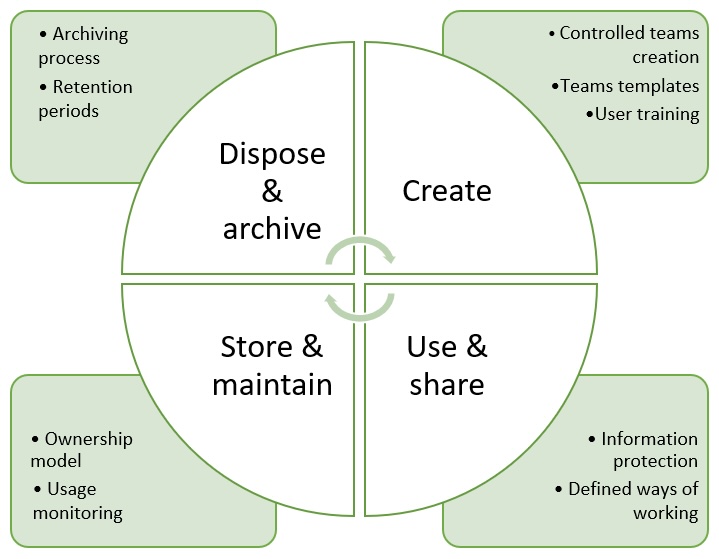
A good governance approach will result in the following benefits:
- encourage collaboration in a way that can be managed by the organisation
- effectively manage the risk of sprawl
- reduce the number of redundant, outdated and unused teams and documents
- make it easy for users to find information they need
- ensure information is appropriately protected
Conclusion
Microsoft Teams has become an essential part of modern work, enabling fast and effective collaboration across organisations. However, without the right controls in place, that same flexibility can quickly lead to sprawl, increased risk, and a loss of trust in the information being shared.
A thoughtful governance approach doesn’t restrict collaboration - it enables it. By defining how teams are created, managed, reviewed, and retired, organisations can strike the right balance between empowerment and control. The result is a Teams environment that is easier to manage, safer to use, and far more effective at helping people find, share, and protect information.
When governance is built into the lifecycle of Microsoft Teams, collaboration scales sustainably and continues to support the organisation as it grows and evolves.